2027 Speaker: Michael R. Wasielewski
Molecular Optical-Spin Interfaces for Quantum Information Applications
Michael R. Wasielewski
Abstract:
Molecular electron spins have emerged as versatile quantum bits (qubits) with wide ranging applications in quantum sensing, coherent communications at the nanoscale, and computing. These applications take advantage of the ability of chemical synthesis to 1) create specific structures with atomic scale spatial control; 2) tailor the magnetic, optical, and electronic properties of the qubits; and 3) construct large-scale ordered arrays of qubits via crystal growth and/or self-assembly. To take full advantage of the tunability of molecular qubits, optical-spin interfaces use photons to create specific spin states as well as provide a means of photonic readout of spin information. We will report on molecular optical-spin interfaces based on photo-excitation of luminescent stable organic diradicals for quantum sensing and photo-driven teleportation of molecular spin states for nanoscale coherent information transfer.
Biography of Michael R. Wasielewski
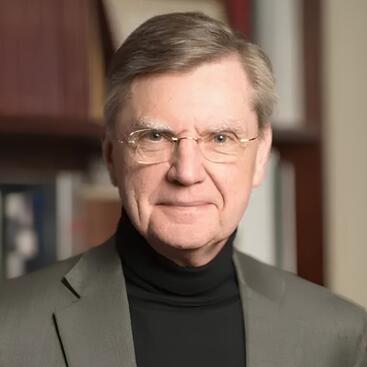
Michael R. Wasielewski is the Clare Hamilton Hall Professor of Chemistry and Applied Physics at Northwestern University. He is also Director of the Institute for Quantum Information Research and Engineering (INQUIRE) and Director of the Center for Molecular Quantum Transduction (CMQT), a US-DOE Energy Frontier Research Center at Northwestern. He received his B.S., M.S., and Ph.D. degrees from the University of Chicago and was a postdoctoral fellow at Columbia University. His research has resulted in over 880 publications and focuses on light-driven processes in molecules and materials, artificial photosynthesis, molecular electronics, quantum information science, ultrafast optical spectroscopy, and time-resolved electron paramagnetic resonance spectroscopy.
He is member of the National Academy of Sciences, the American Academy of Arts and Sciences and is the recipient of numerous awards including the Porter Medal for Photochemistry; the American Chemical Society Marsh I. Lester Award for Exemplary Impact in Physical Chemistry, Josef Michl Award in Photochemistry, James Flack Norris Award in Physical Organic Chemistry, and Arthur C. Cope Scholar Award; the Royal Society of Chemistry Faraday Lectureship Prize, Physical Organic Chemistry Award, Environment Prize, and the Bruker Prize in EPR Spectroscopy; the International EPR Society Medal in Chemistry; the Chemical Pioneer Award of the American Institute of Chemists; and the Humboldt Research Award.